Thứ Tư, 28 tháng 1, 2015

What to see in Hue

What to see in Hue
Hue is a pretty city, criss-crossed by dozens of bridges, lakes, moats and canals. On the river’s north bank is the ancient imperial citadel and residential areas, while the new commercial area, the old French quarter and the hotel district are all on the south bank. Further south are several tombs that belong to the emperors of the Nguyen dynasty.

Kinh Thanh - the Citadel

On the northern side of the Perfume River, Hue’s Citadel (Kinh Thanh) covers some 520 hectares (1,285 acres) and is enclosed by a wall made of stone, brick and earth and measuring 8 metres (26ft) high and 20 metres (65ft) thick. Centre Vietnam tours

Entry to the Citadel is by way of 10 fortified gates, each of which is reached by a low, arched stone bridge across the moat. In imperial times a cannon would sound at 5am and 9pm to mark the opening and closing of the gates. The area within the Citadel comprises three enclosures, the first of which was formerly used to accommodate various royal ministries and which today constitutes a pleasant area of parks, gardens and quiet residential districts. Here may be found the Sung Than Cong (Nine Deities Cannons), kept in buildings flanking the gates on either side of the Flag Tower. 5 best cruises in Halong Bay
What to see in Hue
What to see in Hue

Yellow City
A second moat and defensive wall within the Citadel guard the Hoang Thanh (Yellow City), deliberately modelled on the Forbidden City in Beijing. This inner city has four gates, the chief of which is called Cua Ngo Mon (Meridian Gate, also known as the Noon Gate). This majestic structure, built during the reign of Emperor Minh Mang in 1833, is among the finest surviving examples of Nguyen architecture. The central entrance, reserved exclusively for the emperor, is flanked by smaller passages for the use of mandarins and court officials; these in turn are flanked by two much wider passages intended for the royal elephants. Above the Cua Ngo Mon rises Five Phoenix Watchtower where the emperor sat in state during important ceremonies. 2 days to the Floating Markets

Beyond the Ngo Mon Gate, Kim Thuy Kieu (Bridge of Golden Waters), leads between lotus-filled ponds to Dien Thai Hoa (Palace of Supreme Harmony). This was the throne room of the Nguyen Kings, and is the best preserved of Hue’s surviving palaces. Built by Gia Long in 1805, its yellow-tiled roof is supported by 80 massive wooden columns, lacquered a deep red and decorated with imperial golden dragons.

Forbidden Purple City
Immediately behind the throne room, Dai Cung Mon (Great Golden Gate) once led through to Tu Cam Thanh (Forbidden Purple City). This used to be the sole preserve of the emperor, his queen, his many concubines and female palace servants. No man but the king could set foot here on pain of death – imperial sons were banished when they reached puberty, and the only non-females permitted within the inner sanctum were palace eunuchs. In imperial times the Purple City consisted of more than 60 buildings arranged around 20 courtyards, but it was seriously damaged by fire in 1947 and all but destroyed during the Tet Offensive of 1968. Restoration work, based on surviving photographs, plans and some degree of imagination, was begun in the mid-1990s and is now well under way.

Just southwest of the Forbidden Purple City is an area with numerous temples and smaller palaces. Cuong Dien Tho (Dien Tho Palace) was the traditional residence of various queen mothers and contains more than 20 structures, including the lovely Truong Du ?Pavilion, nestled against a small lotus pond. Completely restored, the magnificent Hien Lam Cac (Pavilion of Splendour), towers above the Cuu Dinh (Nine Dynastic Urns). The urns, cast during Minh Mang’s reign, are decorated with motifs of nature ?and daily life, dragons and historic events.

Perfume River

Any visit to Hue should certainly include a boat trip on the beautiful Perfume River. Boats are readily available for hire, either for a relaxing trip in the vicinity of Hue, or for a longer journey upstream to the tombs of Minh Mang and Gia Long. Night journeys on the river with musical ensembles playing traditional court music can be arranged and are an enchanting experience.

The Imperial Tombs

Scattered across the countryside to the south and west of the city, the Tombs of the Nguyen Emperors are, together with the Citadel, Hue’s greatest attraction. These seven tombs, all of which have features of outstanding architectural merit, are often strikingly different.

Thứ Hai, 26 tháng 1, 2015

Làm thế nào để chia hệ thống công trình điều hòa không khí?


Mặc dù hệ thống dieu hoa gia re trong nước có thể được coi là một cái gì đó của một lãng phí, không thể phủ nhận rằng trong vài mùa hè qua đã được ấm hơn bình thường, với nhiệt độ thường xuyên đạt đỉnh khoảng 30 ° c đánh dấu trong suốt tháng Sáu và tháng Bảy. Đảm bảo rằng bạn và gia đình của bạn ở lại mát mẻ, sau đó, chưa bao giờ quan trọng hơn. Hệ thống chia may mắn thay không ống dieu hoa am tran chinh hang - hoặc là họ cũng được gọi là, điều hòa không khí mini-chia - là hoàn hảo cho cả hai, tính chất thương mại hoặc công nghiệp dân cư và rẻ hơn so với bạn nghĩ.
Hệ thống điều hòa không khí làm việc trong cùng một cách như tủ lạnh tiêu chuẩn của bạn; họ trích xuất các hạt không khí ấm áp từ xung quanh nhà và chuyển nó trở lại vào bầu không khí trong nhà như không khí mát mẻ. Về cơ bản là không khí nóng chiết xuất đi qua một loạt các cuộn dây áp lực để cho phép nó tiêu tan nhiệt và ngưng tụ thành chất lỏng mát mẻ. Chất lỏng này sau đó được gửi thông qua một van mở rộng mà nó bốc hơi như một loại khí lạnh hơn, mà sau đó được phát hành vào phòng chính của toà nhà để hấp thụ bất kỳ nhiệt còn lại và hạ nhiệt toàn bộ khu vực.
Hệ thống phân chia làm việc theo cách tương tự, nhưng với hai phần riêng biệt - một tụ nén ngoài trời và một đơn vị xử lý trong nhà (trong đó bao gồm các cuộn dây làm mát và quạt làm mát). Về cơ bản, điều chỉnh nhiệt trong nhà đồng thời kiểm soát cả hai thành phần riêng biệt; hai được kết nối thông qua một đoạn ống có chứa các chất làm lạnh, nơi nhiệt độ thấp, khí áp suất thấp được chuyển thành nhiệt độ cao, khí áp suất cao. Các fan hâm mộ tụ trong máy nén ngoài trời sau đó trục xuất nhiệt, để lại một áp suất cao, khí đốt ở nhiệt độ thấp được chuyển giao lại cho các đơn vị trong nhà và bị trục xuất khi cần thiết.
Những lợi ích của hệ thống điều hòa không khí chia là gì?

Như một dieu hoa lg Inverter  di động, hệ thống phân chia nhỏ, thường không dễ và đến trong một loạt các thiết kế để phù hợp với hầu như bất cứ nơi nào trong nhà của bạn. Chúng thường được thiết kế để trộn với trang trí nội thất - làm cho chúng thích hợp hơn để các thiết bị di động cồng kềnh cần liên tục mở các cửa sổ để hoạt động đúng. cũng cũng rất dễ dàng lắp đặt điều hòa
Các đơn vị máy nén ngoài trời cũng có thể được trang bị một 'liên kết đoạn' của bất cứ chiều dài bạn thích - cho phép bạn lưu trữ nó ra khỏi cảnh, trên một mái nhà bằng phẳng có thể, hoặc ở mặt sau của khu vườn của bạn trong một nhà kho hoặc nhà để xe.
Với một hệ thống chia nhau khu vực (phòng) có nhiệt riêng của mình quá, vì vậy bạn chỉ cần phòng mát và khi bạn cần phải - tiết kiệm năng lượng và tiền bạc trong thời gian dài.
Điều này cũng làm cho chúng hoàn hảo cho các tòa nhà có nhiều hơn một gia đình cư trú, hoặc cho ngôi nhà có một bổ sung, gia hạn trước đây không có kế hoạch mà nó sẽ là tốn kém và không thực tế để bắt đầu mở rộng mạng lưới phân phối của hệ thống điều hòa không khí cũ của bạn.
Họ là cực kỳ yên tĩnh và có thể được sử dụng cho nghiên cứu của, phòng ngủ và thậm chí cả thư viện; nhiều hơn thích hợp hơn với người hâm mộ điện ồn ào mà chỉ đơn giản là thổi không khí nóng xung quanh phòng chứ không phải thay thế nó. hơn nữa chúng cũng rất dễ ràng bảo dưỡng điều hòa
Như hệ thống truyền thống, điều hòa không khí chia cũng có thể được thực hiện đồng thời có chức năng như một máy - cho bạn hai sử dụng riêng biệt cho một máy.
Bao nhiêu chi phí hệ thống điều hòa không khí chia rẽ?
Chi phí của hệ thống điều hòa không khí chia thường được trích dẫn như đắt hơn một hệ thống được trang bị truyền thống - gần như lên đến 30% hơn - nhưng điều đó chỉ đưa vào cài đặt tài khoản. Một khi bạn đã có hệ thống của bạn và chạy, máy điều nhiệt cá nhân của bạn sẽ giúp bạn theo dõi việc sử dụng năng lượng hiệu quả hơn nhiều, cho phép bạn tiết kiệm đồng xu thêm trong thời gian dài. Giá cuối cùng sẽ phụ thuộc vào một số yếu tố, bao gồm cả số phòng bạn cần nó cho và chất lượng của hệ thống thông gió hiện trong nhà của bạn; nhưng để có được những thỏa thuận tốt nhất luôn luôn cửa hàng xung quanh và so sánh giá giữa một số chuyên gia. Bạn có thể, tuy nhiên, tính toán mức giá trung bình với các khoản sau:
400-500 chân vuông của căn phòng đòi hỏi một tấn A / C.
Một tấn A / C có giá khoảng £ 1.200 đến £ 1.400.
Vì vậy, nếu ba tấn A / C có giá khoảng £ 3500 và năm tấn chi phí khoảng 6.000 bảng Anh, sau đó 2000 mét vuông của bất động sản sẽ có một nơi nào đó khoảng £ 5.000. Hãy nhớ rằng, đây là những chỉ là ước lượng và nếu bạn đang lo lắng về đi qua ngân sách và muốn một sự phản ánh chính xác hơn về chi phí của bạn, bạn luôn luôn có thể thuê một điều tra viên để đo nhiệt Lãi / lỗ kiểm toán của nhà bạn và do đó xác định kích thước thích hợp của không khí chia hệ thống điều bạn sẽ cần. Nó có vẻ phức tạp và tốn kém, nhưng một khi cài đặt chuyên nghiệp bạn

Thứ Tư, 21 tháng 1, 2015

H’mong Mountain Retreat

H’mong Mountain Retreat Those seeking to relax in stunning surroundings may not find what they’re looking for in busy Sapa town, but out of town accommodation, like H’mong Mountain Retreat, which overlooks the breathtaking Muong Hoa valley, provides a welcome alternative. Enjoy sunset on top of Ham Rong Mountain, Sapa

You don't get a view like that from many guest houses.
A little bit of a view.
The retreat consists of an 85-year-old stilt house, which was transported to its current location from a small village 150 kilometres northeast of Sapa, a H’mong family house, also relocated and reconstructed, and five rammed-earth bungalows. The buildings are dotted around terraced paddy, and all have amazing views — so long as it’s not foggy, which does happen. Sapa Vietnam tours

Guest accommodation is in either the bungalows or the H’mong house, which contains two bedrooms and a living area. The bungalows are about as basic as it gets in terms of furnishings, containing a mattress with bedding, a mosquito net, a heater, a lamp and a small table. But put aside any visions of budget beach huts or $4 a night shacks — one in Don Dhet springs to mind — because these are as classy as a rammed earth bungalow can be: the bedding is excellent quality cotton, with thick duvets perfect for chilly Sapa nights, towels are white and fluffy, a tastefully designed lamp sits in the corner and fruit and bottled water are supplied. There’s even a knife to cut the fruit with, although I wondered momentarily whether it was for attacking any creepy crawlies that wandered in. Note: the mosquito net is a good idea, even in winter. Jasmine Cruise – Halong Bay
H’mong Mountain Retreat

The highlight of the rooms are the terraces, which extend out over the rice fields providing near uninterrupted views of the valley below. You’ll have to sit on the floor, as no seating is provided, but you’ll soon forget about that as you enjoy the scenery with a cold can of beer.

The H’mong House is a good alternative for groups or families. Constructed from a mixture of clay walls, palm leaf thatching and palm tree wood flooring, it houses up to four people in two bedrooms. The rooms are bigger than the bungalows but otherwise the same style. It doesn’t feel quite as adventurous as the bungalows but still has great views.

One important thing to note is that neither the bungalows nor the H’mong House have en suite bathrooms. The two modern bathrooms are located in the main stilt house, thereby necessitating a few minutes’ walk along a narrow stoney path between rice fields from your room. Not such an issue during the day when it’s dry, but not the most pleasant experience on a rainy night. Fortunately, lamps are provided.

You won't want to trek anywhere.
You won’t want to trek anywhere.
Meals are taken in the main stilt house, which is also a great place to chill out with a book or play cards — either on the ground floor, with better views, or the upper floor. The furnishings are stunning, created from local materials and designed by co-owner Dinh Khac Tiep, and for chilly days and nights a large coal fire can be lit. Cookery classes are held in the main house — I’ve taken a few cookery classes around Asia and this has to have the best view and the food’s great too (ed’s note: I’ll put it up at number one with Bali Asli in Bali then!).

Dinner is a set vegetarian menu, which may not be to everyone’s taste and although plentiful and warming doesn’t quite hit the spot after a day of trekking. It also adds another US$15 per person to the bill, including a drink, but it’s tasty and there’s not a lot of choice unless you want to trek back into Sapa. Additional drinks are available at reasonable prices.

I may have referenced $4 huts earlier, but it’s not only the quality of the bungalows that bear no resemblance — the prices don’t either. At US$59 per night for a bungalow, including breakfast, this is not budget. You are, however, getting not just a room but an experience as well.

H’mong Mountain Retreat is part of the Tet Lifestyle Collection, a company that takes its responsibility to the local communities in which it operates seriously, with all of its staff either underprivileged youth or ethnic minorities. It also works closely with the local communities to promote the increase of ethnic minority living standards in education and basic health care and a percentage of profits go towards the Mac Ha School.

Give him a hand.
Give him a hand.
Treks and other activities can be organised or you can set out yourself from the retreat for a walk down into the valley. Transfers from Sapa town are provided but if you want to travel back and forth you’ll either need to rent a bike or pay extra.

H’mong Mountain Retreat will suit those looking to get away from it all and spend some quality time with friends or a good book in a unique location, or exploring the local area. It’s not ideal if you want to spend your evenings shopping or boozing in Sapa town, or place an en suite bathroom high on your list of requirements.

Thứ Bảy, 17 tháng 1, 2015

Những sự cố điều hòa thường gặp

Những thông tin dưới đây chỉ mang tính chất tham khảo để các bạn có cái nhìn chính xác hơn về “bệnh” của thiết bị khi đang trong quá trình sử dụng. Chúng tôi khuyên các bạn không nên tự ý xử lý vấn đề nếu không chắc chắn về sự  an toàn về các thiết bị điện mà nên gọi nhân viên kỹ thuật để được tư vấn và nhận được sự hỗ trợ tốt nhất.

1.Remote dieu hoa nhiet do bị mất hình
Nguyên nhân : do ta dùng loại pin thường lâu ngày bị rỉ sét làm hư đầu tiếp xúc pin , giữa pin và bo mạch của Romote mất đường dẫn .
Cách khắc phục : lấy pin cũ ra . tẩy rửa mất phần rỉ sét và thay pin mới đảm bảo chất lượng vào .
2.Romote bị rơi:
Nguyên nhân : Do bị rơi làm hở mạch Remote và mất màn hình trên remote .
Cách khắc phục : ta nên đem đến kỹ thuật để kiểm tra và sửa chữa .
3.Remote dieu hoa midea lên hình nhưng khi ta bấm không nghe tín hiệu “pip”
Nguyên nhân :có thể do bụi bẩn che chắn mắt thần , hoặc do tiếp điện của mắt thần bị đen
Cách khắc phục : dùng khăn khô mềm lau mắt thần . Nếu vẫn không hết gọi nhân viên kỹ thuật để được kiểm tra .
4.Máy lạnh hay chảy nước :
Nguyên nhân : do lắp đặt đường ống thoát nước không có độ dốc hoặc lâu ngày không vệ sinh bụi bẩn bám ngẹt đường ống thoát.
Cách khắc phục : sửa lại vị trí đường ống dẫn tạo độ dốc .Nhờ nhân viên kỹ thuật đến vệ sinh đường ống dẫn làm thông đường ống thoát .
5.dieu hoa am tran bám tuyết :
Những sự cố điều hòa thường gặp

Nguyên nhân 1: do dàn lạnh bị bám bụi và lâu ngày không được vệ sinh.
Nguyên nhân 2 : Máy lạnh thiếu gas ( hệ thống gas lạnh là hệ thống kín nối dàn lạnh và dàn nóng do đó nếu thiếu gas có nghĩa là hệ thống dẫn đã bị rò rỉ ở một vị trí nào đó )
Bên ngoài dàn nóng nơi đầu van ống nhỏ (là ống dẫn gas lỏng đi) bị bám tuyết , đầu van ống dẫn lớn là ống dẫn hơi gas về không đọng sương .
Dấu hiệu nhận biết : Bật nắp mặt nạ của dàn lạnh , rút lưới lọc bụi ra ngoài ta thấy dàn lạnh bị bám tuyết .
Nguyên nhân 3: do khi lắp đặt đường ống gas bị móp ống dẫn gas .
Cách khắc phục : nhờ nhân viên kỹ thuật hỗ trợ thay đường ống dẫn gas mới , Nhờ kỹ thuật đến kiểm tra sự cố xì gas và xử lý và sạc gas lại .
6.Máy lạnh bốc mùi hôi :
Nguyên nhân : do nấm mốc , vị trí các cửa thông của phòng lạnh gần những chỗ hôi , cống rãnh hoặc bếp .
Cách khắc phục : thường xuyên vệ sinh , chọn chế đọ chạy khô trước khi tắt máy khoảng 5 phút (Chế độ Dry)
7.Máy thổi ra hơi lạnh yếu hoặc không có hơi lạnh
Do một số nguyên nhân sau đây :
Máy lạnh bị dơ thổi hơi lạnh ra yếu
Máy bị thiếu gas – sặc thêm gas
Máy mới lắp lạnh yếu do đường ống dẫn gas bị móp .
Chế độ remote không đúng hoặc hư : chỉnh chế độ Remote vào Mode chọn Cool hoặc Auto , Only Fan : chỉ có quạt không có hơi lạnh . Dry là chế độ chạy khô .
8. Quạt dàn nóng không chạy :
Nguyên nhân : do quạt cháy hoặc do cánh quạt bị vướng vât cản .
Cách khắc phục : gọi nhân viên kỹ thuật và kiểm tra quạt .
9.Máy nén lạnh không hoạt động :
Nguyên nhân :
Do cuộn dây motor bị cháy .
Tụ khởi động máy hư , không hoạt động .
Capacyky( Capa) bị hư .
Bộ phận cơ khí của Block bị kẹt
Cách khắc phục : gọi nhân viên kỹ thuật đến kiểm tra và xử lý.
10.Các vấn đề về Nguồn điện :
a.Dấu hiệu nhận biết nguồn điện có vào hệ thống chưa có điện :
Khi ta bật CB trên góc phải dàn lạnh báo đèn nguồn nhấp nháy hoặc cánh đảo tự động khép lại .
Khi bật CB có dấu hiệu xẹt hồ quang nơi Cb bật lên hoặc CB tự động cúp xuống .
Kỹ thuật mối nối điện CB bị hỏng , hoặc do CB hư . Do máy bị chạm gây overload CB trường hợp này ta gọi kỹ thuật .
b.Dàn nóng không có nguồn điện .
Dây cấp nguồn từ đầu lạnh đến đuôi nóng bị đứt .

Thứ Tư, 14 tháng 1, 2015

Escaping the cold in Hanoi

For a city that’s cold and grey for a few months of the year, Hanoi has an unfortunate lack of venues to get cosy in. But in the absence of open fireplaces and comfy sofas, here are a few places we’ll be spending time this winter. Hanoi Cycling Tour
Blankets are one option.
Drinking tea or coffee might be great for warming up, but in the open-fronted — or outdoor — coffee shops in Hanoi you’ll still need to keep your coat on. For somewhere a bit more weather-proof head south to Cong Caphe or over to Cafe Duy Tri near West Lake. The seats at Duy Tri aren’t designed for spending time on, but it’s certainly cosy (that is, small) and the tasty drinks — and free WiFi — can keep you occupied for hours. For a more tourist- and Western-orientated coffee drinking joint try old-timer Puku, which at least has the sofas, if not the fireplace. And the cakes are good so you can fatten up to ward off the cold. The cakes are also good at Joma on Ly Quoc Su. Hanoi Walking Tour
Or try a hot ginger and lemon tea.
Escaping the cold in Hanoi

If you’re more a fan of alcoholic beverages then our top picks are Polite Pub on Bao Khanh, Finnegans on Luong Ngoc Quyen and Le Pub on Hang Be. We particularly like Polite Pub for its gloomy — in a good way — atmosphere, cold draft beer and music, but the large pool table is a draw as well. Finnegans is as close to an Irish pub as you’ll get here and has high-backed booths, both of which are high on the list of “things which make a pub cosy”, and shows sports on a large screen. Finally, the newly decorated upstairs area at Le Pub is well protected from the outside elements and offers a decent comfort food menu.
Outside of Hoan Kiem district, if you’re over near West Lake check out Red River Tea Rooms which is heated and provides a selection of  boardgames and books, which can be enjoyed in the comfy back room — or anywhere in the pub really, there are no rules. Down towards Vincom, round the corner from DC Bistro, you’ll find Tadioto. This very highly-regarded hangout actually does have a fireplace, but even without it, it’s still a very welcoming place to while away the hours, either during the day or all night.
Icy glasses aren’t really necessary in this weather.
Our final bar recommendation is Bar Betta. The eclectic inside area is comfortable and inviting and cuddling up under the space heaters on the roof terrace you feel like you’re cheating the temperature. Shame the service is poor.
But if money were no object we’d be spending more time at the Bamboo Bar at the Sofitel Metropole Legend Hotel. It may be an outside bar but blankets are provided to accompany your hot winter drink — try the hot cider — and a visit alone is enough to jerk us out of our winter blues.
Of course, if you want to stay out and about, absorbing Hanoi’s unique culture, then wrap up and warm yourself from the inside out with hotpot or a steaming bowl of pho. Above all, don’t let the cold put you off. Hanoi is a fantastic place to visit at any time of year — you just need to come prepared.

Thứ Tư, 7 tháng 1, 2015

Traditional attire of the Brau people

Living in the culture-rich Central Highlands, the Brau people have formed their unique customs and culture, including traditional attire.
Like other ethnic groups in the Central Highlands, the Brau’s traditional costumes are handmade and sophisticated. Previously their clothes were simply for protecting human bodies and agricultural production. Thao Loi, head of the Dak Me hamlet in Bo Y commune, Ngoc Hoi district, Kon Tum province, said: “In the past the Brau people weaved clothes from the barks of trees. The bark was smashed, squeezed and boiled before being used for weaving. Now we no longer use this material.”
Traditionally, a Brau man wore a loin-cloth without a shirt on. A woman wore a ragged skirt. In summer, both men and women were half-naked or wore short tunics. In winter, they covered their bodies with a soft sheet of cloth. As time went by these clothes have been modified. Now men wear a tunic in a square shape. The front flap is of a bight color with dark stripes on the shoulders and fringe. The tunic’s back is marked with horizontal stripes on the lower part. Female attire is more elaborate with patterns. Nguyen Phong, a researcher of Central Highlanders’ costumes, told VOV: “The designs differ between male and female clothes. Men’s designs are rugged with such shapes as arrows and fences while women’s designs are flowers and plants, with accessories in agate and bead”.  Centre Vietnam tours
Traditional attire of the Brau people

In general, today’s clothes of the Brau are not colorful and complicated, but simple and natural. In their traditional attire, men look strong and fierce with their exposed muscles and women become more graceful and lissome. Their typical ornaments are feather, elephant’s tusk and metal items. The Brau women wear many necklaces, bracelets and anklets because they think that more they wear the more they attract men. Some anklets produce interesting sounds. Mekong with transfer to Phu Quoc Island
Dang Hung from Kom Tum province’s Council of Ethnicity said: “There is a State-funded project to revive the brocade weaving among the Brau ethnic people. Locals used to buy cloth from Laos, but now they weave cloth themselves. The project helps open 4 training courses on brocade weaving for local women”. Jasmine Cruise – Halong Bay
Traditional Brau clothes beautify its wearers and contain distinctive cultural feature of an ethnic group in Vietnam’s Central Highlands

Thứ Sáu, 2 tháng 1, 2015

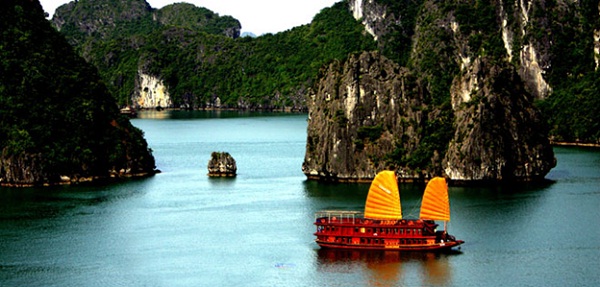
What you will see on a Halong Bay cruise trip?

2 days 1 night tour

On the first day, your cruise will start at noon and as the cruise sets sail, lunch will be served.

In the afternoon, you may have a chance to stop at several famous sites, such as Luon Cave, Đầu Người Island (Human Head Island), Con Rùa Island (Turtle Island), and Cổng Trời Island (Heaven Gate Island). At one of the stopping points, tourists may also take part in exciting kayaking or swimming activity. However, there might be a small additional fee depending on the tour package you register for. Halong bay tours
What you will see on a Halong Bay cruise trip?

Coming back to the ship after a long day, tourists would be welcomed by more relaxing activities like massage, Jacuzzi (for luxury cruise), and a delicious dinner on board. Many cruises also organize cooking demonstration where you will learn to make Vietnamese food. Some cruises offer tourists outdoor BBQ party on the sundeck, which is a great way to spend time with friends and families. After that, you may choose to stay at the bar with lots of qualified wines, playing cards with friends, watching TV, or trying your luck with squid fishing.

When you wake up the next morning, your breakfast is ready to serve with an early morning Tai Chi class on the sundeck to get yourself into the flow of the nature. On the second day, you are scheduled to visit more famous tourist attraction, such as Titop Island or Sung Sot Grotto (Surprise Cave). The whole trip ends by a tour back to the harbor after that, so don’t forget to take some nice pictures of the bay on the way.

3 days 2 nights tour

Much similar to the previous itinerary, your cruise trip starts with a brief session about the itinerary and safety instructions on boat. The tour usually starts from 11:00am – 12:00am, so that you can have a tasty lunch while observing the stunning landscape of Halong Bay.

The cruise continues going around the bay until you reach a tourist spot, usually a famous beach or limestone cave such as Titop Island, Con Rùa Island (Turtle Island), or Cổng Trời Island (Heaven Gate Island), then anchors for the night there. You will get enough time to enjoy water sports and activities like snorkeling, swimming, and kayaking in the green water of the bay. Depending on your cruise, you might enjoy BBQ party on beach, sundeck, or in the on-board restaurant.

On the next day, the journey starts with Tai Chi class in the early morning and breakfast. You have the whole morning to visit other attractions of the bay, and most cruises will transfer you to a smaller day boat so that you can go down the more narrow path of the Bay. You can spend the rest of the day with your friends and family exploring the sea. A delicious dinner is ready anytime when you come back.

For the thirday, you will often get to see Surprise Cave after breakfast. Brunch will be served as the cruise slowly heads back to the harbour.